

Blog
Importing Automotive Chemicals from the US into Colombia: A Distributor’s Guide

Importing Automotive Chemicals from the US into Colombia
A distributor's guide to sourcing antifreeze, coolant, DEF, and windshield fluid from a Miami-based manufacturer — FTA benefits, Caribbean-coast logistics, and documentation.
Vehicles in Colombia's fleet — one of South America's largest automotive markets
A critical gateway for the northern Andean corridor
Colombia is one of South America's largest automotive markets and a critical gateway for regional distribution throughout the northern Andean corridor. With a vehicle fleet of over fifteen million units, a growing middle class, and a commercial sector that includes one of the continent's most active trucking and logistics industries, Colombia generates substantial and consistent demand for automotive chemicals — antifreeze, engine coolant, DEF, windshield washer fluid, and degreaser.
For Colombian distributors and importers, the United States–Colombia Trade Promotion Agreement (US-Colombia FTA) provides meaningful tariff advantages for qualifying US-manufactured goods, including automotive chemical products. Combined with Miami's geographic proximity and direct ocean service to Colombia's Caribbean ports, US-manufactured automotive chemicals represent a commercially competitive sourcing option for the Colombian market.
Executive Summary
Key TakeawaysColombia's fleet of more than fifteen million vehicles spans four major urban markets and a commercial sector built on heavy trucking, oil and gas equipment, and refrigerated export transport — a demand base that is both large and structurally diverse. The US-Colombia FTA, in force since 2012, allows qualifying US-manufactured chemical preparations to enter at reduced or eliminated duty when supported by a Certificate of Origin, while a 19% IVA applies on the CIF value plus any applicable duty. Miami reaches Cartagena and Barranquilla in 4 to 6 days with direct service, making the Caribbean coast the practical entry point; Buenaventura on the Pacific requires transhipment and takes longer. Inland freight is the variable that distinguishes Colombia from island markets — roughly 1,000 km from Cartagena to Bogotá and 650 km to Medellín — and belongs in every pricing analysis. Seven documents clear a shipment through DIAN via a licensed Agencia de Aduanas.
Over Fifteen Million Vehicles
One of South America's largest automotive markets and a distribution gateway for the northern Andean corridor.
FTA Preferences Since 2012
Qualifying US-manufactured goods benefit from reduced or eliminated duties with proper Certificate of Origin documentation.
19% IVA on Top of Duty
Calculated on the CIF value plus applicable import duty, so it applies regardless of FTA treatment.
4 to 6 Days to the Caribbean Coast
Cartagena and Barranquilla are the preferred entry points; Pacific-coast Buenaventura requires transhipment.
Inland Freight Is Part of Landed Cost
About 1,000 km to Bogotá and 650 km to Medellín by road — a meaningful component of your pricing.
Seven Documents, One Agencia
Import declarations are filed with DIAN through a licensed Agencia de Aduanas, with VUCE authorization where required.
Bottom Line: FTA tariff preferences plus direct Miami service to Cartagena and Barranquilla make US-sourced product competitive in Colombia — provided inland freight is priced in from the start. American Mfg Co has manufactured and exported from Miami since 1994.
The Colombian Automotive Market
Colombia's vehicle fleet has grown significantly over the past two decades, driven by economic expansion, rising consumer incomes, and infrastructure investment that has opened new logistics corridors. Bogotá, Medellín, Cali, and Barranquilla are the primary automotive markets, with regional secondary markets served by distributors based in those hubs.
Bogotá
Capital and largest market
Medellín
Antioquia industrial hub
Cali
Southwest regional centre
Barranquilla
Caribbean coast gateway
The fleet composition is diverse
Japanese brands — Toyota, Mazda, Suzuki, Renault (produced locally) — dominate the passenger segment.
The commercial segment is anchored by Kenworth, International, Freightliner, and local-assembly Hino and Mitsubishi Fuso trucks, all of which require heavy-duty coolant and DEF as newer Tier 4 compliant engines enter the fleet.
Oil & gas equipment fleets
Colombia's oil and gas sector — primarily in the Llanos Orientales and Caribbean coast regions — maintains large industrial equipment fleets that require heavy-duty coolant and industrial degreaser.
Refrigerated export transport
The cut-flower and fresh-produce export industries in the Bogotá savanna and Antioquia rely on refrigerated transport fleets, another demand category for quality automotive chemicals.
US-Colombia FTA and Import Duties
The United States–Colombia Trade Promotion Agreement entered into force in 2012. Under the FTA, many US-manufactured goods benefit from reduced or eliminated import duties when accompanied by proper Certificate of Origin documentation demonstrating US origin.
Logistics from Miami to Colombia
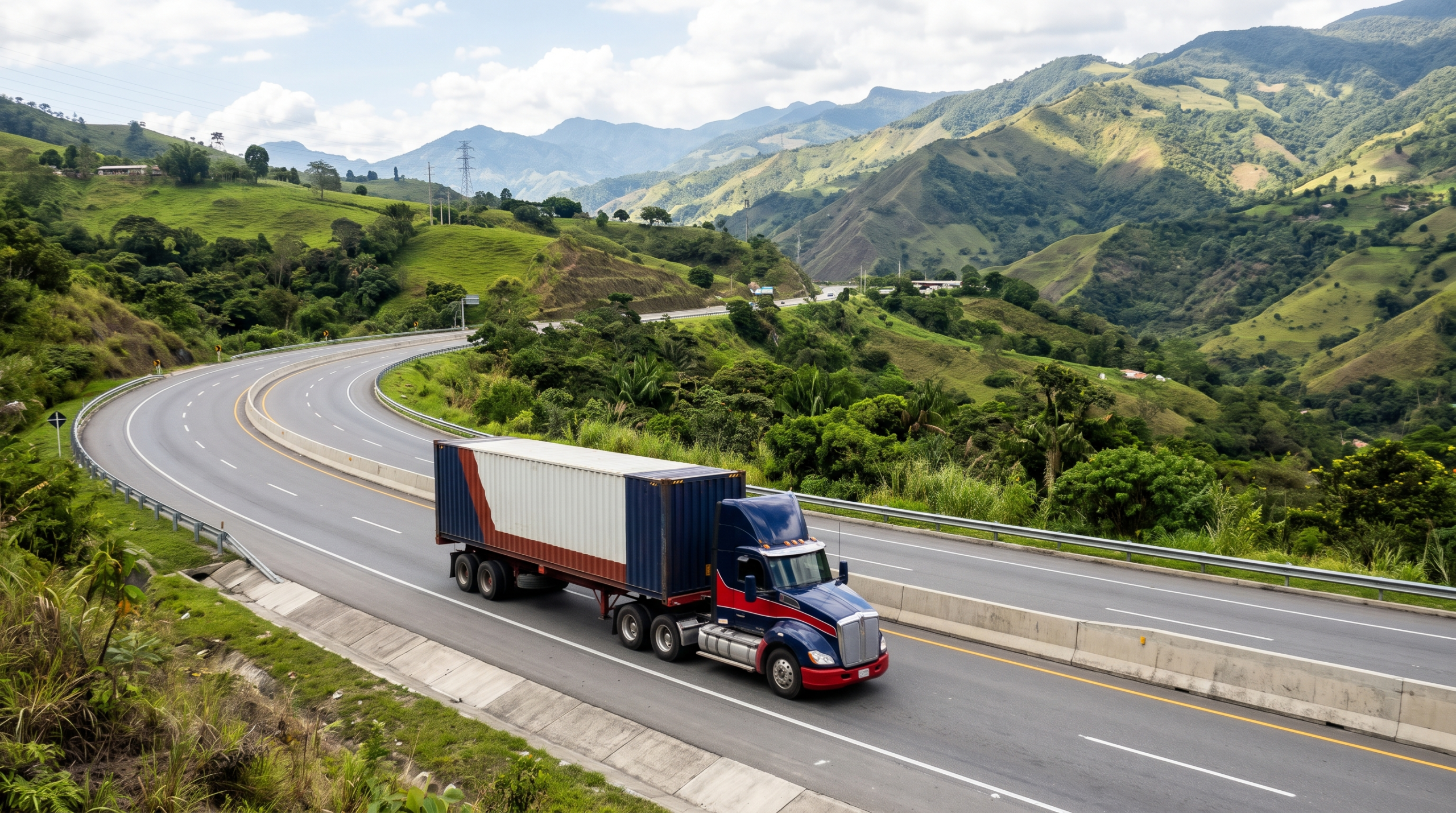
Miami to Colombia is a well-served trade lane with direct container service to Colombia's major Caribbean ports.
Transit time
Miami to Cartagena typically 4 to 6 days. Miami to Barranquilla approximately the same. Miami to Buenaventura (Pacific coast) requires transhipment and takes longer — Cartagena or Barranquilla are the preferred entry points for Miami-origin freight.
Port of entry
Cartagena (Contecar and Sociedad Portuaria) and Barranquilla (Puerto de Barranquilla) are the primary container terminals for Caribbean-coast entry. Both have good onward connectivity to Bogotá, Medellín, and interior markets via road.
Inland freight
Bogotá is approximately 1,000 km from Cartagena by road. Medellín is approximately 650 km. Inland freight costs are a meaningful component of landed cost and should be factored into pricing analysis.
Shipping unit
FCL (Full Container Load) is standard for distributor-volume orders. AMC ships FOB Miami.
Required Import Documentation
- Commercial invoiceItemized with product descriptions, unit prices, quantities, and FOB value in USD.
- Packing listQuantities, gross/net weights, and packaging type per line item.
- Bill of lading (ocean)Issued by the carrier for the ocean leg of the shipment.
- Certificate of OriginRequired for FTA preferential treatment; issued by the Miami Chamber of Commerce.
- Safety Data Sheet (SDS)For each product — required by DIAN and Colombian environmental authorities.
- Import declarationDeclaración de Importación filed with DIAN through a licensed Agencia de Aduanas.
- VUCE authorizationIf the product requires prior authorization from Colombia's Single Window for Foreign Trade.
Why Source from the US for the Colombian Market?
The US-Colombia FTA's tariff preferences, Miami's direct ocean connectivity to Cartagena and Barranquilla, and the strong commercial and fleet demand across Colombia's major cities and industrial corridors create a compelling case for US-sourced automotive chemicals. Colombian distributors who establish a direct supplier relationship with a US manufacturer gain supply chain reliability, consistent US-standard product quality, and full SDS documentation for regulatory compliance.
American Manufacturing Co. has been manufacturing and exporting automotive chemicals from Miami since 1994. Our team is experienced in export logistics for the Colombian market and can support customers through the documentation and logistics process from first order.
See also our Latin America hub and our guide to importing into Guatemala.
Ready to source automotive chemicals for Colombia?
If you are a Colombian distributor or importer evaluating US-sourced automotive chemicals, contact American Manufacturing Co. for FOB Miami pricing, product specifications, and SDS documentation.
Request a quote or schedule a call with our export team.
FOB Miami pricing, product specifications, and SDS documentation.
Request a Quote Schedule a Call