

Blog
How to Choose the Best Automotive Chemical Manufacturer in the USA: What Distributors and Importers Need to Know

How to Choose the Best Automotive Chemical Manufacturer in the USA: What Distributors and Importers Need to Know
Evaluate suppliers, verify certifications, and find the right manufacturing partner for your market.
Whether you are building an automotive chemical catalog from scratch or expanding an existing product line, the products you choose to carry define your market positioning, your customer relationships, and your margins.
Not all automotive chemicals are equal from a distribution standpoint. Some are high-volume essentials that every customer needs repeatedly. Others are high-margin differentiators that separate professional distributors from commodity suppliers. The right catalog has both.
This guide walks you through exactly what to look for — and what questions to ask — so you can identify the right US automotive chemical manufacturer for your market and place your first order with confidence.
Supplier Verification & Regional Logistics Matrix
Sourcing directly from an established automotive chemical manufacturer in the USA minimizes global supply chain risks, cuts intermediary broker margins, and locks in certified fluid performance. Enterprise-level validation requires auditing targets across three strategic trade corridors:
United States Domestic
Requires verified compliance with rigorous ASTM D3306 / D6210 guidelines for fleet cooling networks and strict API ISO 22241 enforcement for heavy industrial Diesel Exhaust Fluid infrastructure.
The Caribbean Basin
Focuses entirely on container cube metrics and freight-per-liter economics. Utilizing ultra-concentrated product formats scales down total dead-weight shipping overhead, turning water blending into local distributor margin.
Latin America Corridors
Driven by rapid regulatory shifts toward Euro 4, Euro 5, and Euro 6 diesel compliance frameworks. Securing high-purity single-source capacity protects long-term supply networks from regional resource shortages.
Start With the Most Important Question: Are They Actually a Manufacturer?
The US automotive chemical market includes direct manufacturers, contract manufacturers, private label resellers, and brokers. From the outside, they can all look similar — a professional website, a product catalog, and competitive pricing.
The difference matters enormously for your business. A direct manufacturer controls their own formulation, production schedule, quality standards, and pricing. A broker adds cost and introduces supply chain risk — if their underlying supplier has a production issue, your supply is affected and you may not even know why.
When evaluating any supplier, ask these questions directly:
- Do you manufacture this product at your own facility?
- What is the physical address of your manufacturing plant?
- What is your production capacity and lead time for a full container order?
A real manufacturer answers all of these immediately and without hesitation. A broker or reseller will deflect, generalize, or give you answers that do not quite add up.
Certifications Are Non-Negotiable
Any US automotive chemical manufacturer worth working with will have third-party verified certifications for their products. These are not marketing claims — they are documented compliance with published industry standards that protect your customers and your business.
ASTM standards for antifreeze and coolant
Look for compliance with ASTM D3306 for passenger car coolant, ASTM D6210 for heavy-duty coolant, and ASTM D4985 for diesel engine coolant. Ask for the documentation, not just the claim.
API certification for DEF
Diesel Exhaust Fluid must meet ISO 22241 and carry API certification. This is independently verified and critical for any buyer supplying fleets or markets with modern diesel vehicles.
OEM compatibility
If your customers service specific vehicle brands, confirm the products meet the relevant OEM specifications. Common ones include GM Dex-Cool, Ford and Chrysler HOAT specifications, and European OEM standards.
Safety Data Sheets
Required for all chemical products. Must accompany every shipment. No exceptions.
Location Matters More Than You Think
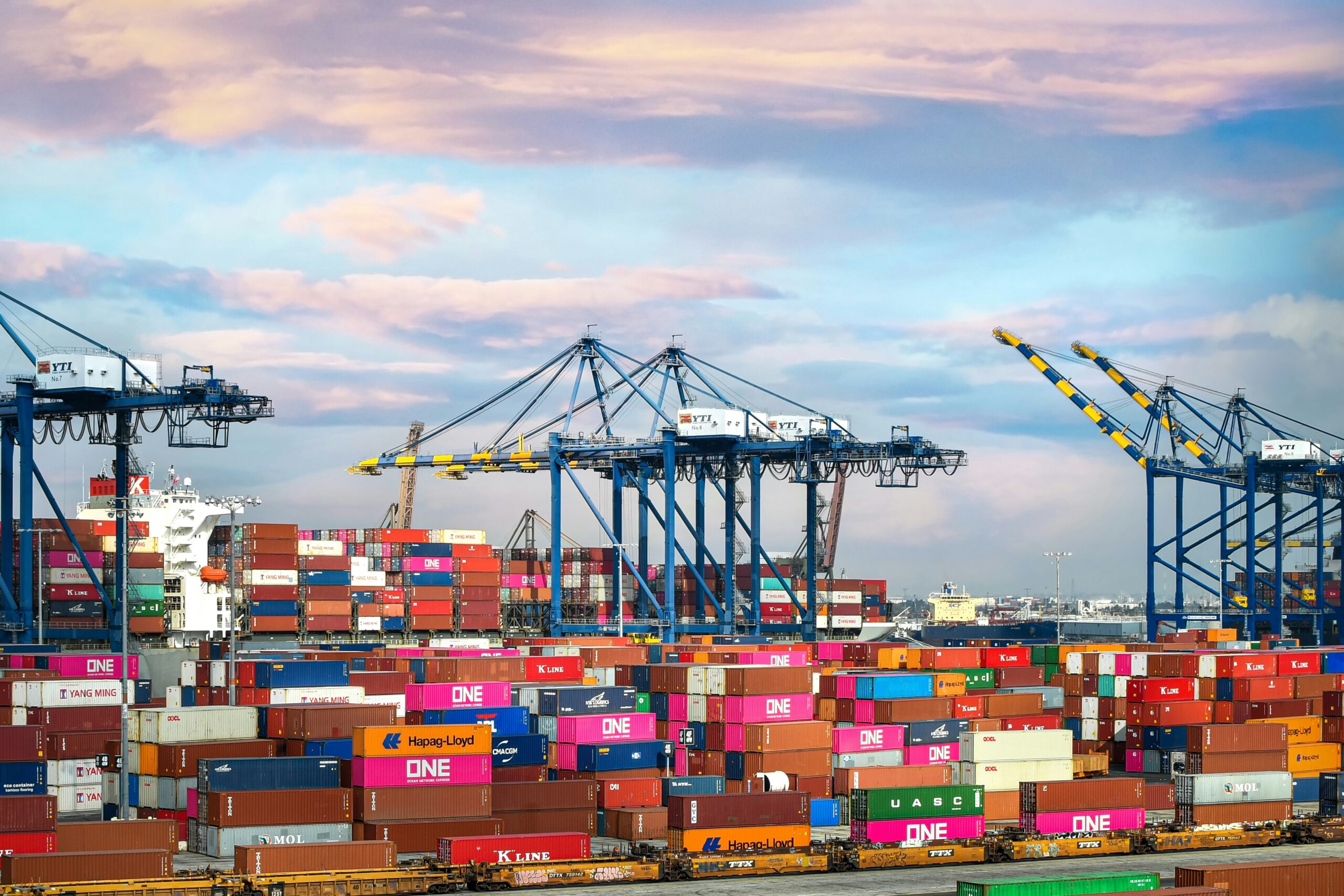
For international buyers — particularly those supplying the Caribbean, Latin America, or other export markets — the physical location of a US manufacturer has a direct impact on your landed cost and supply chain reliability.
A manufacturer based in Miami, Florida has a structural logistics advantage for buyers in these markets. Miami is the primary US gateway for Caribbean and Latin American trade.
- Container services from Miami to major ports across the region are frequent, fast, and competitively priced.
- Transit times from Miami to Caribbean ports can be as short as 2 to 5 days.
Compare this to a manufacturer located in the Midwest or on the West Coast, where additional inland freight to a port adds cost and time before the product even leaves the United States.
For US domestic buyers, proximity to major distribution corridors in the Southeast — Florida, Georgia, Texas — also means faster and cheaper replenishment cycles.
Evaluate Their Product Range
The fewer supplier relationships you manage, the simpler and more cost-effective your procurement operation. When evaluating a US automotive chemical manufacturer, consider whether they can supply your full product range from a single source.
A manufacturer who produces antifreeze, coolant, DEF, windshield washer fluid, and degreasers under one roof means one contract, one set of payment terms, one logistics relationship, and one documentation process. As your volume grows, consolidating with a single manufacturer also gives you more leverage on pricing and priority production scheduling.
- Can they supply your full product range?
- Do they offer the specific formulations your market requires?
- Can they scale production as your business grows?
- Do they offer both standard and private label options?
Private Label Capability
For retail chains and distributors building their own brand, private label capability is a key differentiator when choosing a manufacturing partner. Not every manufacturer offers private label programs, and those that do vary significantly in their MOQs, turnaround times, and packaging capabilities.
When evaluating a manufacturer's private label program, ask about minimum order quantities per SKU, label setup lead times, available container formats and sizes, and whether they can work with your design team on label artwork. A manufacturer with an established private label program will have straightforward answers to all of these.
Track Record and Stability
In manufacturing, longevity is a meaningful signal. A company that has been producing automotive chemicals for decades has navigated supply chain disruptions, raw material price changes, and market shifts. They have the institutional knowledge and supplier relationships to deliver consistent product through challenging conditions.
Ask how long they have been in business, whether they can provide customer references in your region or industry, and what their track record looks like for on-time delivery and order accuracy.
How American Mfg Co Measures Up
American Mfg Co has manufactured automotive chemicals at our own facility in Miami, Florida since 1994. We produce antifreeze, coolant, DEF, windshield washer fluid, and degreasers — all 100% Made in the USA and certified to ASTM and API standards.
We are a direct manufacturer. We own our facility, control our formulations, and manage every stage of production in-house. We supply distributors, importers, and retail chains worldwide by container and truckload. Our Miami location provides natural logistics advantages for buyers across the Caribbean, Latin America, and beyond. Private label programs are available across our full product line.